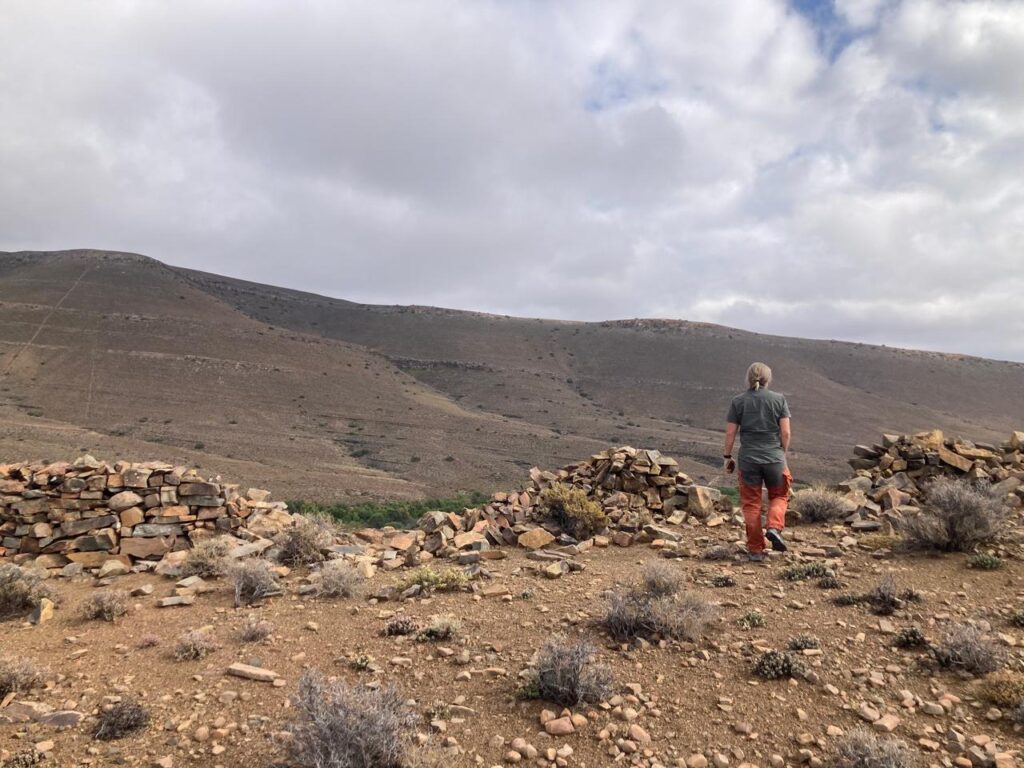
Why This Reserve Matters
The Wild Bee Reserve lies within the Greater Karoo — the most diverse semi-desert in the world. This extreme ecosystem is home to unique plants and pollinators found nowhere else. Among them are solitary bees, many still undocumented, and the Cape honeybee (Apis mellifera capensis), along with a little-understood hybrid between the Cape honeybee and the African honeybee (Apis mellifera scutellata).
Bees are central to the health of this landscape. Solitary bees and honeybees pollinate wild plants that feed and shelter countless other species, forming the foundation of a functioning ecosystem. Without them, plants fail to reproduce, food webs collapse, and biodiversity declines. In semi-desert regions like the Karoo, where survival is already finely balanced, the role of pollinators is even more critical.
Honeybees are keystone species, and solitary bees are indicator species, reflecting the health of their environment. Here, rare and endangered plants rely on highly specialized pollinators, sometimes found only in this region, that emerge in synchrony with a single flowering event. This fragile balance of timing and relationship requires protection.
Threats to the bees and the land:
Why a Wild Bee Reserve makes a difference:
By establishing this reserve, we are protecting not only the bees, but also the plants, animals, and land that depend on them. The Wild Bee Reserve will become a stronghold for biodiversity in the Karoo, ensuring resilience in a rapidly changing climate.
Share this link with your friends.


 More About the Cooperative