Opportunity Cost is an economic tool that helps with decision making.
The Power of Your Choices
Have you ever thought about what you
give up when you make a decision?
That’s what economists call
opportunity cost. It's a way to understand that every choice comes with a trade-off. In simple terms,
opportunity cost is the value of the next best alternative you didn’t choose.
A Quick Example
Let’s say you decide to binge-watch Netflix tonight instead of doing your homework. The opportunity cost? It’s the completed homework — and possibly the good grade or free time tomorrow that you gave up.
It doesn’t mean that watching Netflix was the
wrong choice. It just means you gave something up in order to make that choice — and it's important to be aware of what that was.
Why It Matters
Many of the decisions you make every day — how you spend your time, money, or energy — are automatic. You just do what feels right in the moment.
But what if you paused and
thought about the cost of your decisions? Not in money, but in missed opportunities — things you could have done instead that might bring you closer to your goals?
That pause is powerful. It builds awareness. And awareness builds better habits.
To do: The Decision Journal
This week, I challenge you to track your choices — just for five days. This isn’t about making the “right” or “wrong” decision. It’s about learning to pause and evaluate/analyze.
Here’s how it works:
Step-by-Step: Daily Decision Practice
Each day after school, when you're deciding what to do next:
- Pause.
- Write down your top 2 choices.
- Example: Do homework vs. Hang out with friends
- List the benefits of each option.
- What do you gain from each?
- Pick the one you’re going to do.
- Now look at the one you didn’t choose.
- What are the benefits you’re giving up? Are you okay with that trade-off?
- Reflect.
- Look back at what you chose. Were the benefits worth it?
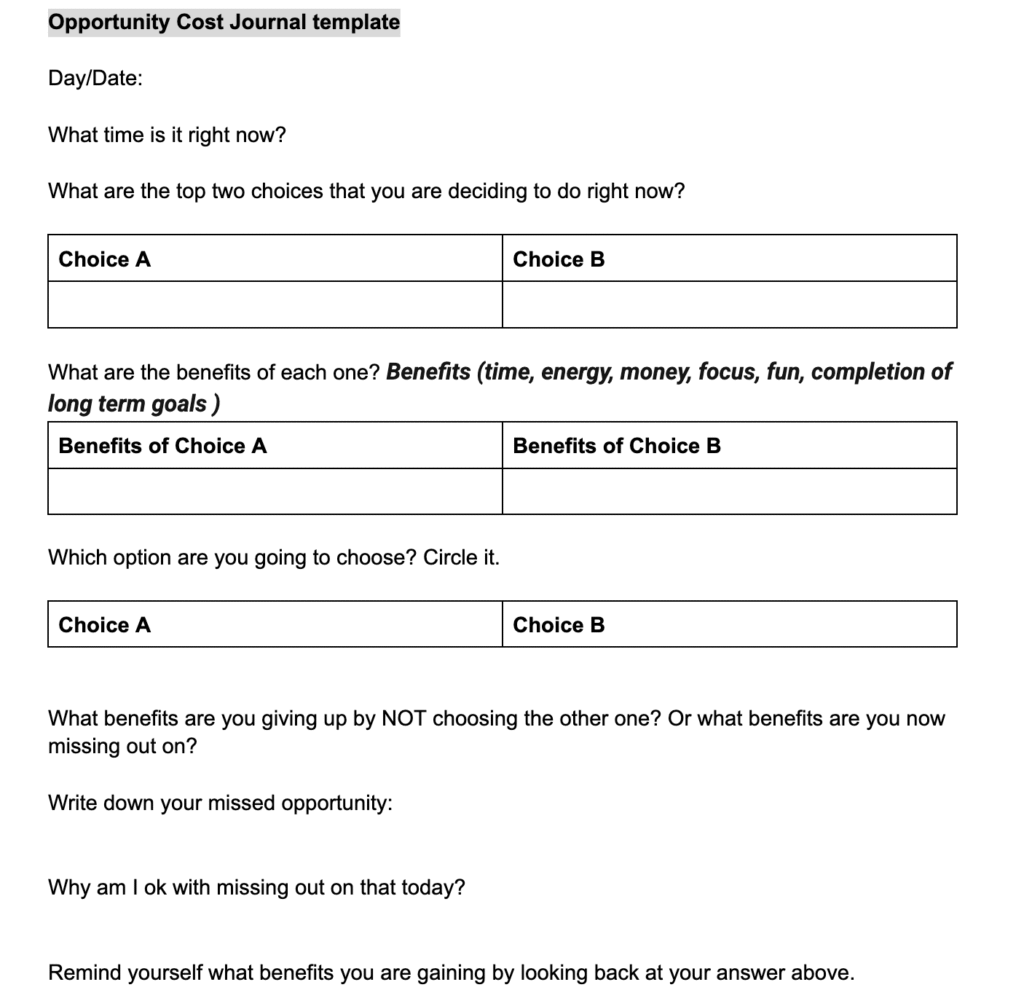
You can use a notebook, a notes app, or print out or use
this simple template. What matters is doing the thinking.
Why This Matters to You
Let’s say school was tough today — you’re mentally drained. You choose to relax and hang out with friends instead of jumping straight into homework. That’s valid! Social time is important, and sometimes that’s exactly what you need.
But imagine doing that
every day.
This journal helps you see the bigger picture — patterns in your choices. Are you consistently giving up your long-term goals (like better grades or getting into a college you want) for short-term relief or fun?
This isn’t about guilt. It’s about
balance — and knowing
when and
why you make the decisions you do.
Final Thought
Opportunity cost isn’t just an economics concept — it’s a life skill.
Taking the time to pause and reflect can help you make smarter, more intentional decisions. Over time, this awareness can build better habits, more confidence in your choices, and a stronger connection to your goals.
So, post your decision journals or your reflections to this path to show your analysis! What did you learn using this simple economic tool?


 More About the Cooperative