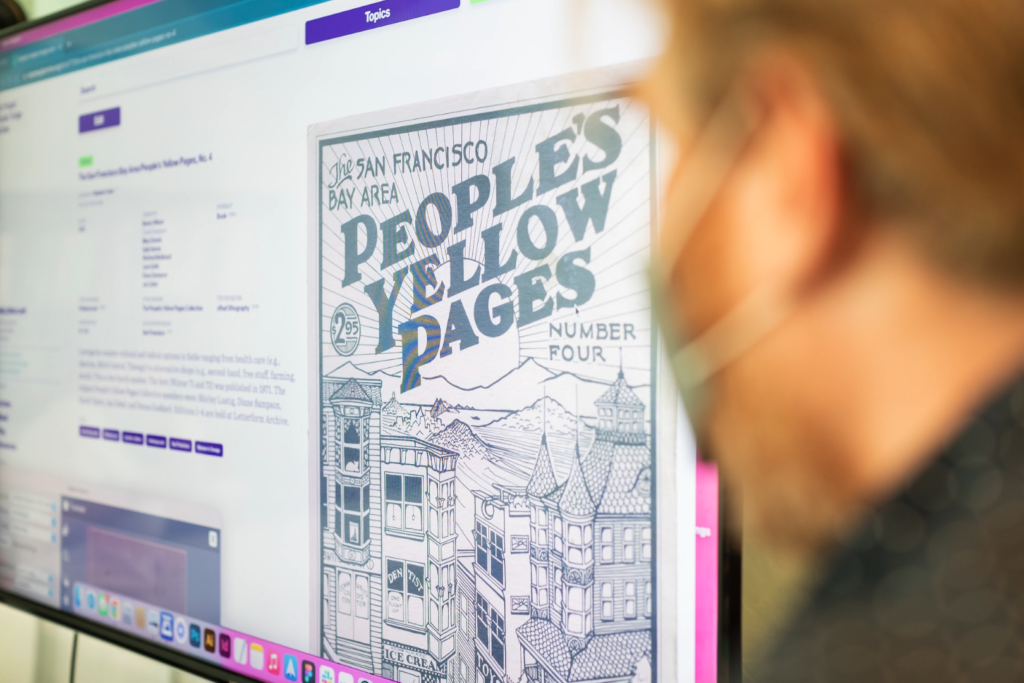
My work, be it academic or volunteer, focuses on helping to illuminate the lesser-known histories of graphic design. This field, which is often reduced to being perceived as simply a method to shill products, is in actuality, the primary way in which we communicate with and for each other in print and on screen. In addition to helping us in commerce, graphic design is how we share critical information that can save lives. It’s how we share delight in words and images. It’s how we document our world. All of these works become a part of our social fabric and graphic design becomes the receipts of our history in full.
* * *
There has been a consistent thread in my desire to educate and support the causes of marginalized groups since the start of my career when I was the art director for Bitch magazine (a feminist response to pop culture) and when I worked with various nonprofit clients. As a tenure-track professor, my historical research began with a documentary—Graphic Means: A History of Graphic Design Production (2017). In it I investigated manual graphic design production technologies (how designers prepared their work for print) and the transition to digital methods. What started as an interest in tools, quickly evolved into a study of how we, as a society, manage the evolution of technologies for good or bad. The film helped designers reflect on the digital revolution and ponder what lay ahead. In 2017, we had no idea about the change that was to come just 5 years later with AI, but now as the film continues to screen, the conversation is just as lively if not more than it was 9 years ago when it first came out.
* * *
As an educator I teach graphic design history where I get to share the incredible stories of our discipline with new designers. I also make a point of giving them a chance to research their own line of interest as it relates to graphic design. And everything intersects with graphic design. Students have researched Chicano Farmworker movement, the development of digital keyboards for Chinese language, the history of advertising for menstruation products, the historical tattooing practice of indigenous Filipinos, and much more. The People’s Graphic Design Archive is a place where students can find ideas for their research as well as share what they have learned. Then another student or practitioner has access to their work, and the cycle continues. This kind of exchange is a critical way to expand our method of sharing design history to avoid the repetition of the same tropes and overblown mythologies that have been retold for decades, while also reflecting so many more people in the stories.
* * *
For The People’s Graphic Design Archive, I helped with my founding co-directors to get the custom platform online, which required a lot of research and debate into what the best method was to make adding to the archive both easy, but also effective—ie: not reductive like the noncontextual additions to sites like Pinterest. Today, I moderate new submissions, work with volunteers, manage technical upkeep with our engineer, and help in day-to-day management of the archive.

Share this link with your friends.

 About The Wonderment Co-op