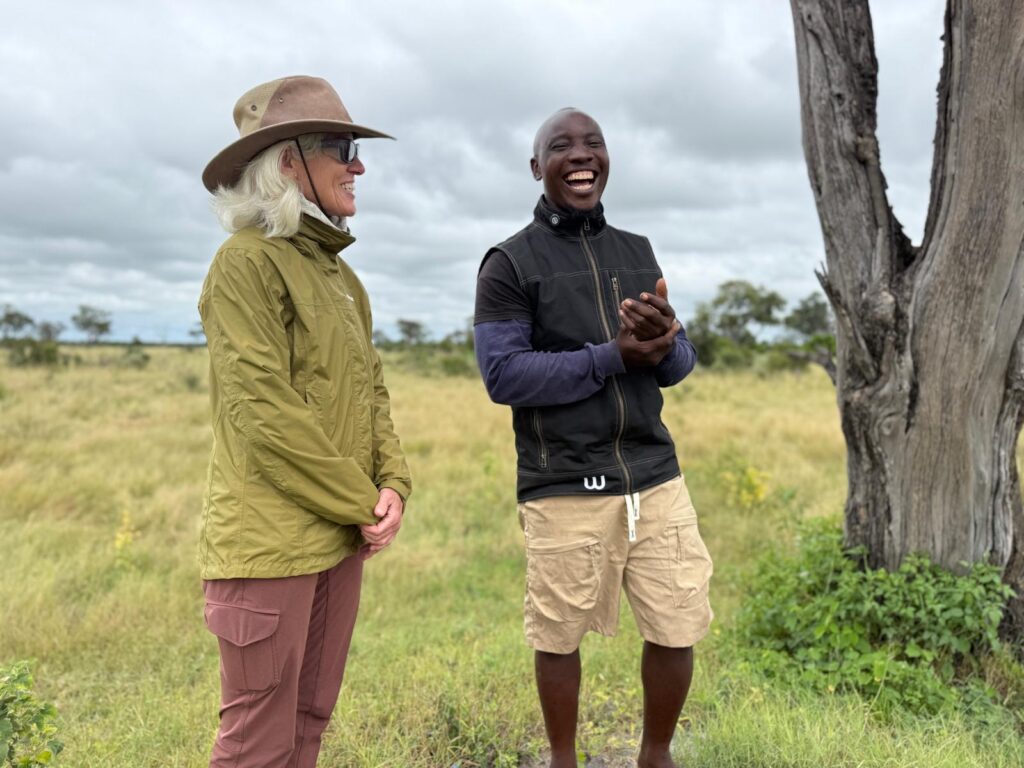
What feels different about these wilderness experiences is that they invite us to participate in relationship rather than simply visit a place.
Most systems train people to separate logistics from relationship, funding from care, infrastructure from emotional integrity, conservation from love, and communication from trust. But living systems do not function through those separations.
The way we work with others within the field allows us to recognize coherence when it appears.
What we are slowly weaving together is unusual precisely because it refuses fragmentation. What emerges through our work is the recognition that the invisible architecture — trust, reciprocity, honesty, accountability, emotional coherence, presence — is not “soft” or secondary. It is the stabilizing structure that allows everything else to endure.
We are helping to create language for something many people have sensed but could not yet fully articulate: that right relation itself may be one of the most practical and necessary forms of conservation infrastructure we have.
And importantly, this is not being built abstractly. It is being tested in real relationships, real wilderness, real uncertainty, real financial vulnerability, and real human complexity. That gives the work depth and credibility that purely conceptual frameworks rarely achieve.
The root truth underneath it all is that “The structure itself is relational.”
And perhaps that is why the work resonates so strongly when people encounter it. Beneath the exhaustion and fragmentation of dominant systems, many people are quietly longing to participate in something held together differently — something where contribution, trust, reverence, and belonging are not peripheral values, but the actual operating system.
Share this link with your friends.

 About The Wonderment Co-op