 More About the Cooperative


A new Response has been added to the Re-framing the Conservation Paradigm Path.
"Walking Into the Field: How My Understanding of Conservation and Philanthropy Changed
Orientation
Ten years ago, I felt a quiet but persistent longing.
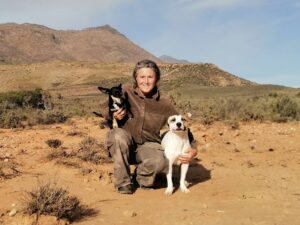
After decades working within a highly structured professional system, I wanted to sit in wild spaces — not as a manager, not as a savior, not as a strategist — but as a learner. I wanted to understand how best to support wild beings and the human communities who live in relationship with them.
I began traveling across Africa. Over the last decade I have spent time in South Africa, Namibia, Kenya, Zambia, Botswana, the Central African Republic, the Republic of Congo, Chad, Madagascar, Zimbabwe, and Mozambique — often returning to the same places to deepen relationship rather than accumulate experiences.
I entered conservation and philanthropy with curiosity and trust. I assumed these systems existed primarily to protect life.
What I encountered complicated that assumption.
Experiences That Disrupted My Assumptions
These are not indictments of individuals. They are moments that revealed patterns.
1. Hero Narratives and Colonial Posture
At a fundraising event for a well-known conservation foundation, I watched founders position themselves as wildlife experts and conservation heroes. The language carried an unexamined colonial confidence — as though land and wildlife required Western authority to be legitimate or safe.
It unsettled me.
I began to notice how easily conservation storytelling centers charismatic founders rather than ecosystems, local stewards, or non-human agency.
2. Conservation Entangled With Private Profit
I learned of conservation funds being used to translocate wildlife into areas where the decision-makers owned safari lodges and would financially benefit from the presence of those species.
The language used was conservation.
The incentives were mixed.
I began to see how easily protection and profit intertwine — and how difficult it becomes to disentangle motive from mission when wildlife must also serve tourism economics.
3. The Aesthetic of “Authenticity”
In multiple safari camps described as conservation-driven and community-supporting, I observed a familiar structure:
Ownership by descendants of colonial settlers.
White leadership and front-of-house representation.
Indigenous staff in back-of-house roles.
The optics were polished.
The hierarchy felt unchanged.
This was not universal — but it was frequent enough to feel systemic.
4. Knowledge Hierarchies
I was told by more than one white male guide that local guides were “not properly trained.”
I witnessed the dismissal of the traditional ecological knowledge of a Motswana employee within a conservation company owned and led by white management.
In subtle and overt ways, Western scientific frameworks were elevated as authoritative, while lived, place-based knowledge was treated as anecdotal.
I began to question:
Who decides what counts as expertise?
Who defines legitimacy?
5. “Wildlife Must Pay Its Way”
I repeatedly heard a phrase spoken as unquestioned truth:
Wildlife must pay its way in order to warrant conservation.
Tourism revenue. Trophy hunting. Ecosystem services. Carbon credits.
When I wondered aloud whether wild beings might have intrinsic worth independent of economic return, I was told that thinking this way was naïve — that this is simply “how it works.”
It was presented as realism.
But I began to see it as inheritance — a worldview shaped by extractive capitalism and colonial land relations, now embedded within conservation logic.
Recognizing the Pattern
Over time, these experiences formed a pattern.
Modern conservation in Africa, though often motivated by genuine care, frequently operates within structures inherited from:
Colonial governance (external control, centralized authority)
Racial hierarchy (knowledge and leadership stratification)
Capitalist valuation (worth determined by revenue generation)
Philanthropy often mirrors these same dynamics:
Funding wants a ‘return on investment’
Metrics are prioritized over relationship.
Storytelling centers donors or founders.
Short timelines override ecological timescales.
Local stewards must align with external narratives to access support.
This is not universally true.
But it is common enough to shape the field.
What Shifted in Me
Gradually, I stopped asking how to improve the existing model.
I began asking a different question:
What would conservation look like if it emerged from right relationship rather than management?
What would philanthropy feel like if it were participation rather than transaction?
I began seeking out small-scale visionaries:
Individuals rooted in their landscapes.
People who relate to wild beings as sovereign, not assets.
Stewards who prioritize listening over branding.
Conservationists who are willing to protect land whether or not it is economically optimized.
I came to see:
Data is valuable — but it is not the only form of knowing.
Revenue can support protection — but it cannot define worth.
Local ecological knowledge is not supplementary — it is foundational.
Wild beings are not service providers within a human economy.
Conservation does not need hero figures. It needs relationships.
A Different Framing
If wildlife must “pay its way” to survive, we have already accepted a worldview in which existence requires economic justification.
But what if conservation is not about ensuring that nature remains profitable?
What if it is about re-entering right relationship with systems far older and more intelligent than our markets?
What if philanthropy is not the act of rescuing, but of remembering interdependence?
This shift does not require anger.
It requires clarity.
The existing systems are not malicious.
They are inherited.
And inheritance can be examined.
An Invitation
I am not interested in dismantling for the sake of dismantling.
I am interested in coherence.
If conservation, philanthropy, and social justice are to be aligned, they must be rooted in:
Humility.
Shared authority.
Local epistemic sovereignty.
Ecological timescales.
Intrinsic value.
Mutual flourishing.
There are people and projects already living this way — often quietly, often without institutional endorsement.
My work now is to walk alongside them.
To learn.
To amplify without appropriating.
To invite participation that is grounded in trust rather than control.
For those who resonate, there is space here."